Charge it
Introduction
In a rapidly evolving transportation landscape, the need for accessible, efficient, and user-friendly electric vehicle (EV) charging solutions has never been greater.
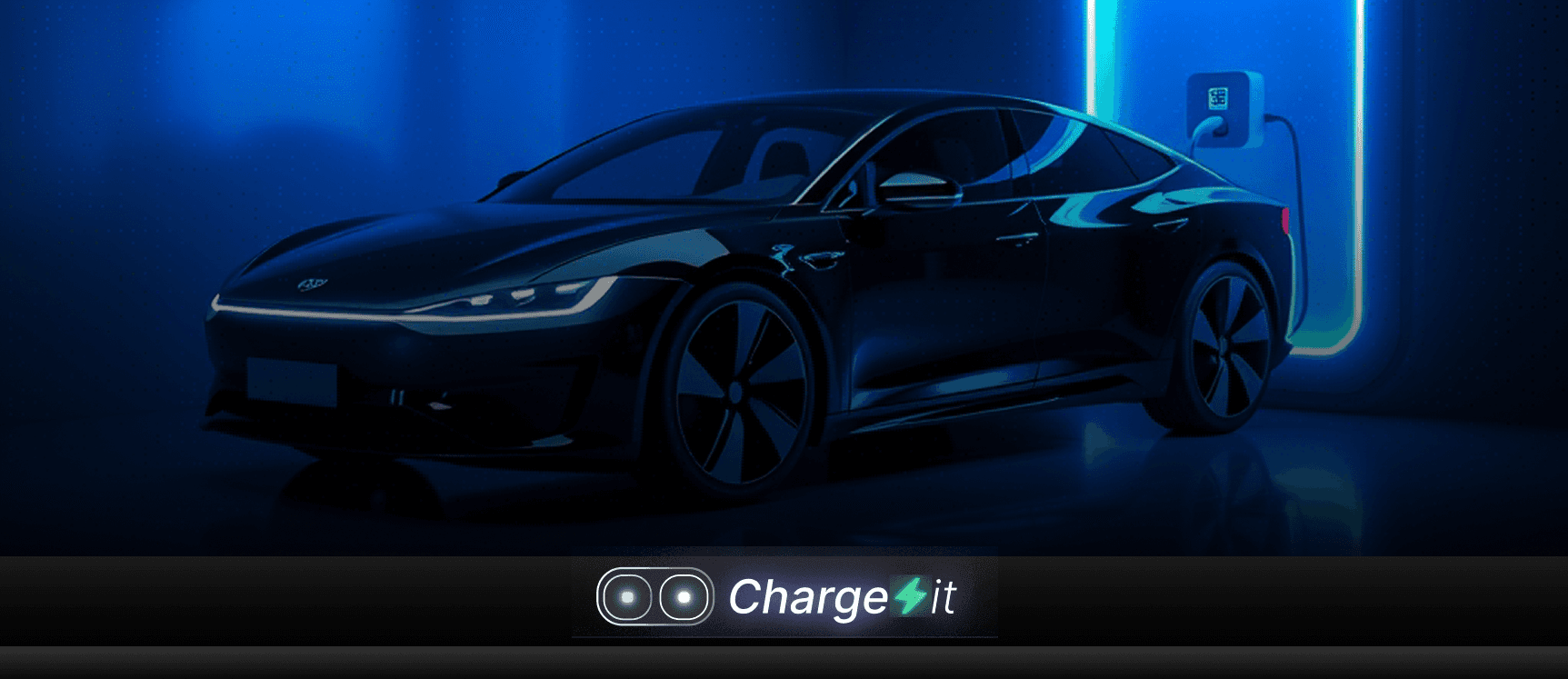
Charge It is an electric vehicle charging web application dedicated
to simplifying the process of locating and reserving charging stations. It helps users quickly find available charging options and seamlessly reserve their spot in advance.
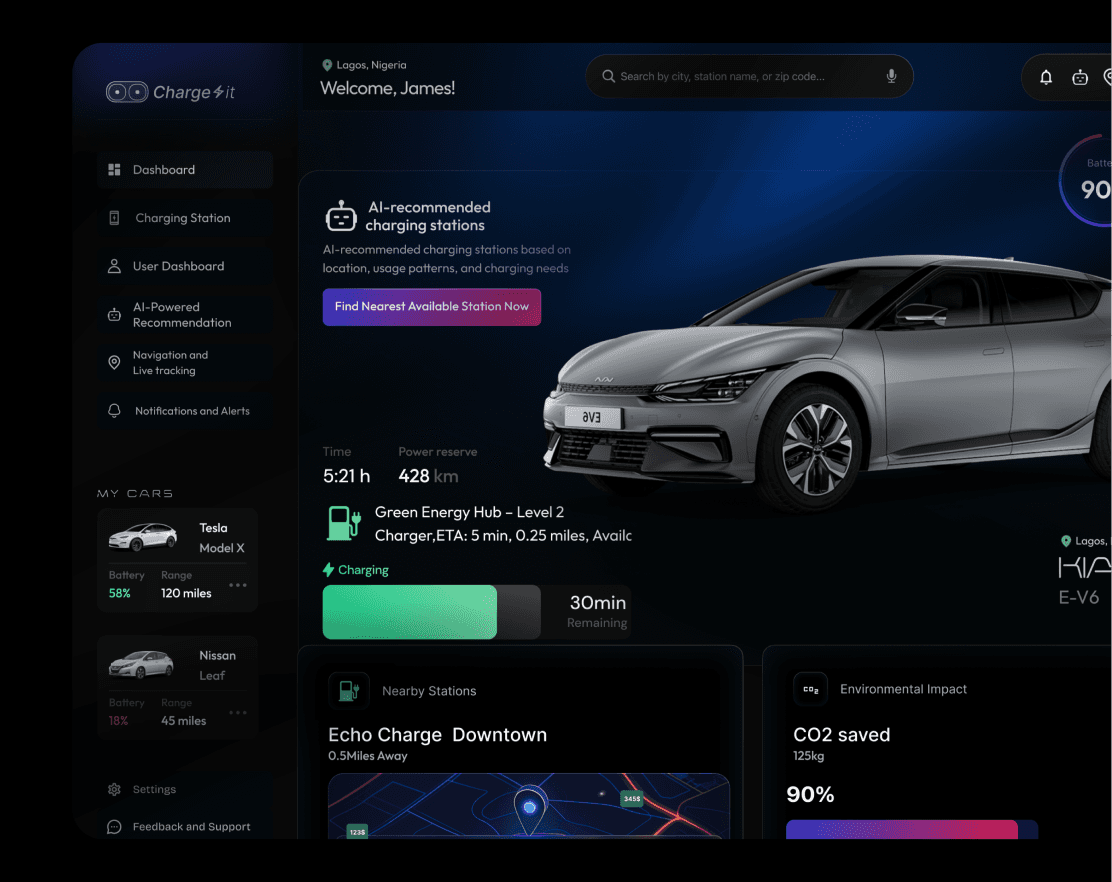
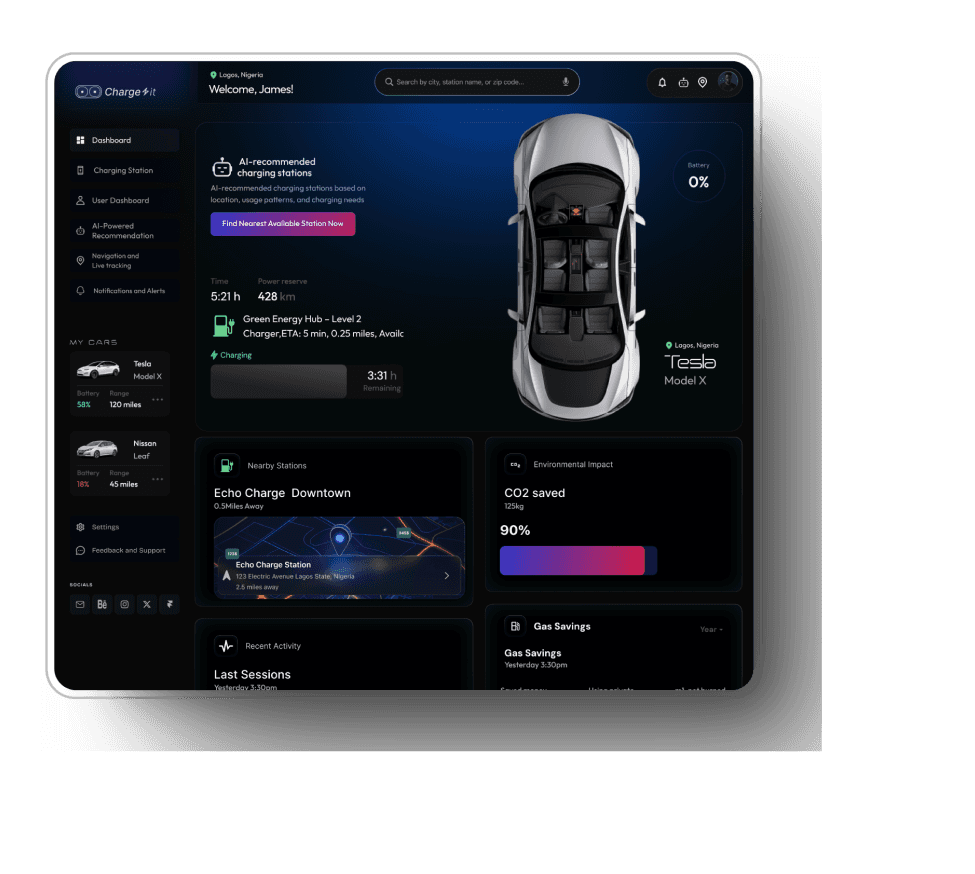
The app offers a wide variety of features, from real-time updates and AI-powered recommendations to detailed station information and interactive maps. Users can browse charging stations by location, charger type, pricing, and availability, search for specific stations, and save their favorite spots for easy access.
Project Overview
Charge It aims to simplify the EV charging experience by enabling users to find, reserve, and navigate to the nearest and most suitable charging station. With AI-driven recommendations and a clean, intuitive interface, this platform will ensure ease of access, real-time updates, and a seamless user experience.
Responsibilities:
Conducting interviews, paper and digital wireframing, low and high-fidelity prototyping, conducting usability studies, accounting for accessibility, iterating on designs and responsive design.
The Problem
The problem with EV charging is that many electric vehicle owners struggle to find reliable and convenient charging stations. Users often need to switch between multiple apps or websites to locate available stations, check pricing, and make reservations. This can be frustrating and time-consuming, especially when drivers are in urgent need of a charge or when they are on the go.
Moreover, users are concerned about the security of their financial information, especially when using mobile apps for financial transactions. The rise of cybercrime has made it crucial for users to have confidence in the security measures of the app they use.
Purpose
EV charging web application leveraging AI to assist users in locating nearby charging stations with enhanced user-friendly design and functionality
Human-Centric Design Approach
The core philosophy behind Charge It was to place the user at the center of every design decision. Our process was driven by four main design goals:
Clarity: The interface needed to be straightforward and engaging, ensuring users immediately understand how to access key features.
Efficiency: Minimizing the number of steps required to find and reserve charging station was paramount.
Accessibility: We committed to inclusive design by integrating high-contrast modes, screen reader compatibility, and voice command functionalities.
Engagement: Beyond functionality, we aimed to create an experience that users would find enjoyable, incorporating gamified elements to highlight their positive environmental impact
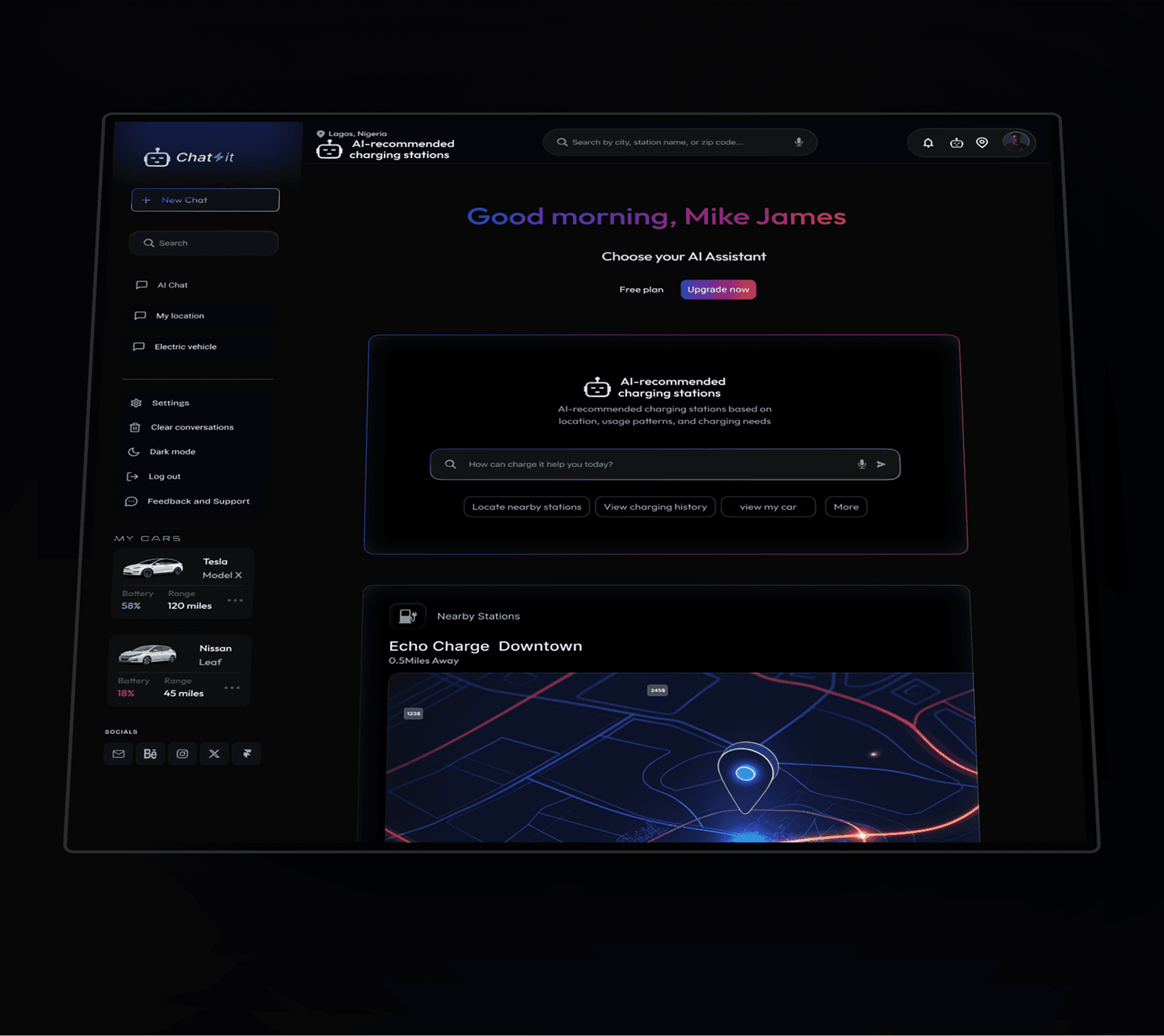
Design Goals
1. Clarity: Ensure the interface is clean and intuitive for effortless navigation.
2. Efficiency: Minimize steps to access critical features like station search and reservation.
3. Accessibility: Incorporate inclusive design principles for users of all abilities.
4. Engagement: Deliver an experience
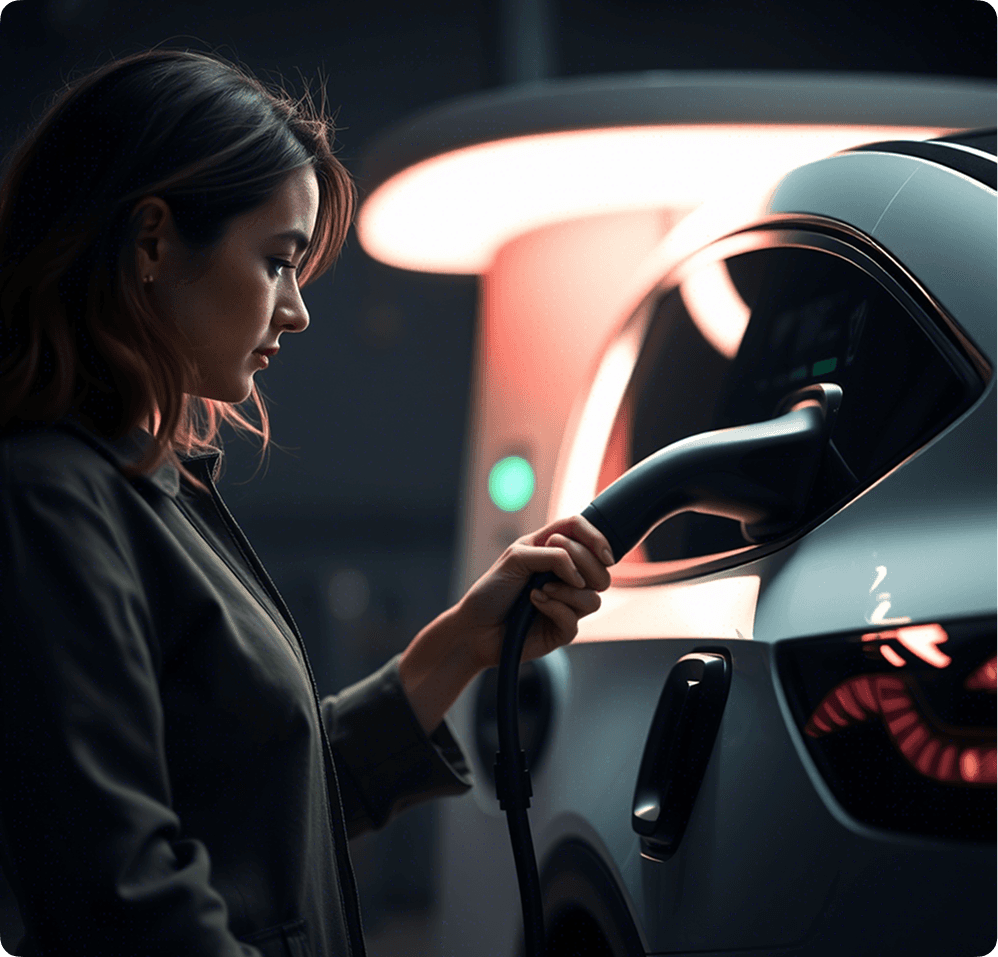
Target Users
Primary Users: EV owners seeking convenient and reliable charging solutions.
Secondary Users: EV fleet operators, travelers, and city residents.

The process
A framework is always needed to come up with a suitable product.
I choose to follow the Thinking Approach to guide us throughout the process. This effective process helped us research thoroughly before we dig into the problem and come up with a product solution
Discover
Define
ideate
Wireframe & Prototype
Test The Product
User research: summary
To understand the challenges EV drivers face when searching for and reserving charging stations, I conducted foundational qualitative research including interviews, empathy mapping, site-map, and usability testing. My goal was to uncover user frustrations and needs to design a more intuitive and efficient Charge It experience, prioritizing deep insights due to time constraints.
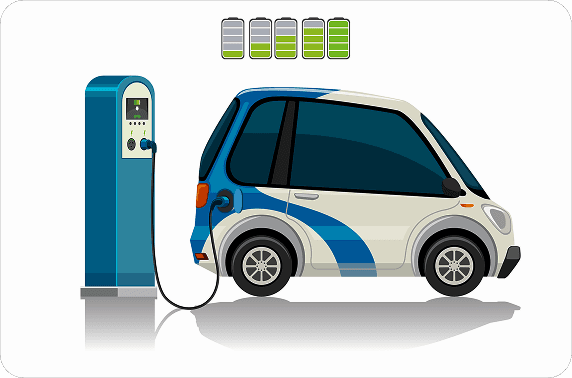
Key Findings
EV drivers have limited time to find and reserve charging stations, making real-time availability crucial.
Many users struggle with switching between multiple apps to check charger status, pricing, and navigation.
The lack of personalized recommendations forces users to spend extra time searching for suitable stations.
Accessibility features are often missing in existing solutions, making it harder for all users to navigate efficiently.
User research: pain points
Limited Time – EV drivers need a quick and efficient way to find and reserve charging stations, especially during busy schedules or road trips. Manually searching for available chargers wastes valuable time.
Fragmented Information – Users often have to switch between multiple apps or websites to check charger availability, pricing, and navigation, leading to frustration and inefficiency.
Accessibility Barriers – Many existing EV charging platforms lack essential accessibility features like high-contrast modes, screen reader compatibility, and voice commands, making it difficult for all users to navigate seamlessly.
Reservation & Payment Friction – The process of booking a charging slot and making payments can be complex, with unclear reservation holds and limited payment options, causing drop-offs before completing transactions.
Research Process
To better understand potential users, I interviewed five EV drivers. These interviews aimed to gather insights on their experiences with existing EV charging apps, identify pain points, and explore opportunities for improvement. It became clear that convenience, real-time availability, and seamless navigation are critical factors for users.
Some of the questions I asked were:
How do you usually find nearby EV charging stations?
How often do you use EV charging apps?
What challenges do you face when searching for and reserving a charging station?
Have you ever had difficulty making a payment or securing a reservation for a charging slot?
What features or improvements would you like to see in an EV charging app that current apps lack?
Empathy Map
Empathy mapping helps us understand our users' needs and emotions to create a seamless and user-friendly charging experience. By considering what catches their attention, evokes emotions, and influences their decisions, we can design an intuitive and efficient platform that meets their expectations.

User Persona
Olivia is a tech-savvy marketing executive who frequently drives her EV for work and personal use. She needs a fast and reliable way to locate charging stations and reserve spots in advance because she often finds charging stations occupied and struggles with unreliable charging station information.

James is a fleet operator managing multiple EVs for his delivery service. He needs an efficient and scalable way to track charging availability and optimize routes for his drivers because charging delays impact delivery schedules and increase operational costs.

Competitive Analysis
I conducted a competitive Audit for both direct and indirect competitors, looked at what they did and how well they do it, and what they could do to make it better in terms of features, visual design, accessibility and flows.
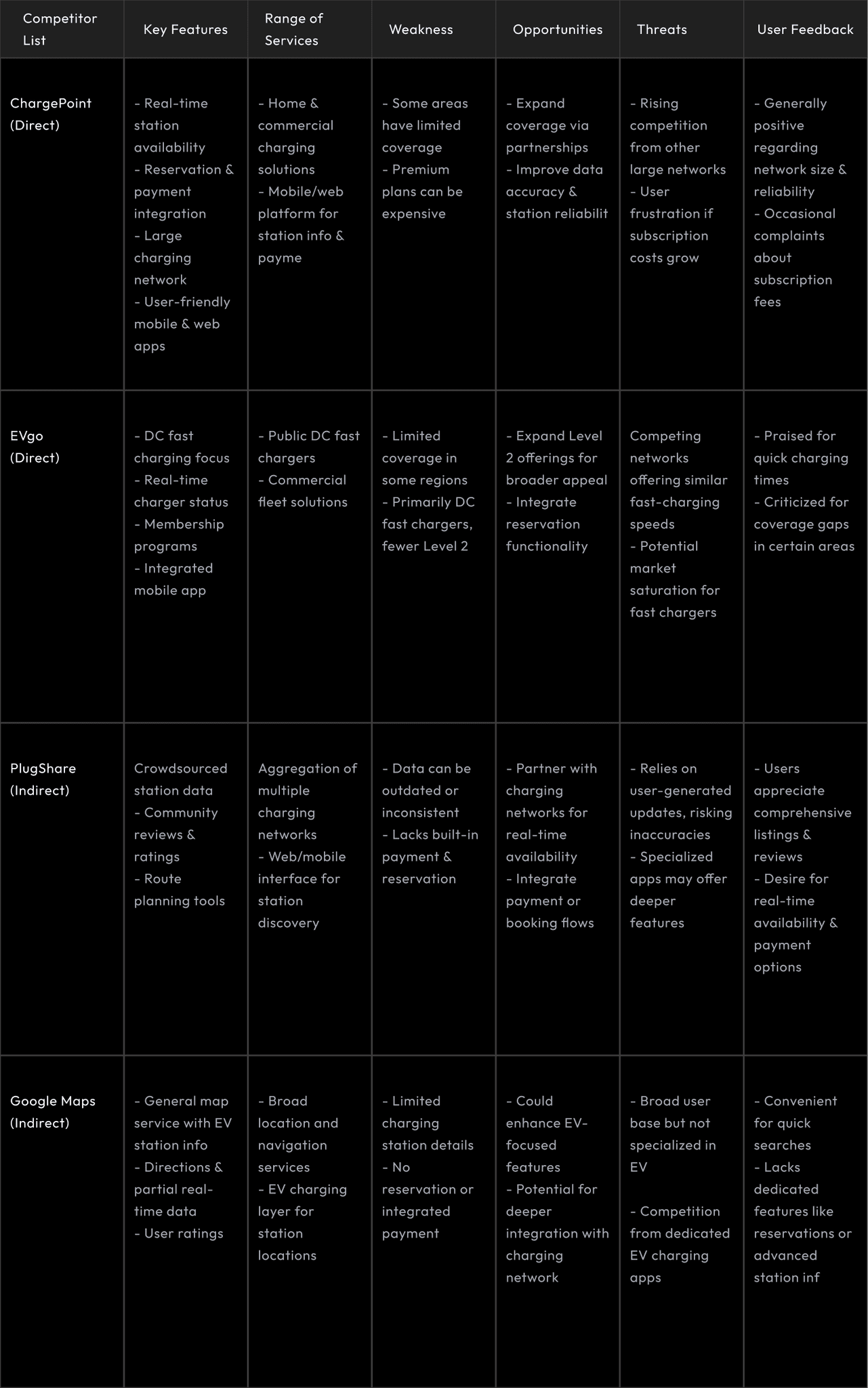
This analysis aligns with the Charge It by demonstrating where existing solutions excel and where gaps remain—particularly in AI-driven recommendations, seamless reservations, and real-time station availability.
User journey map
By creating user journey maps, I wanted to illustrate the process of how Mike,James behaves, feels, and what they think while accomplishing their goals to address pain points or provide moments of delight. The user journey maps help us to create paths and reduce bias.

Primary Sitemap
Below is a Primary Sitemap for Charge It, presented in a similar style to your reference image. It outlines the main sections of the EV charging web application, ensuring clarity and alignment

Digital wireframes
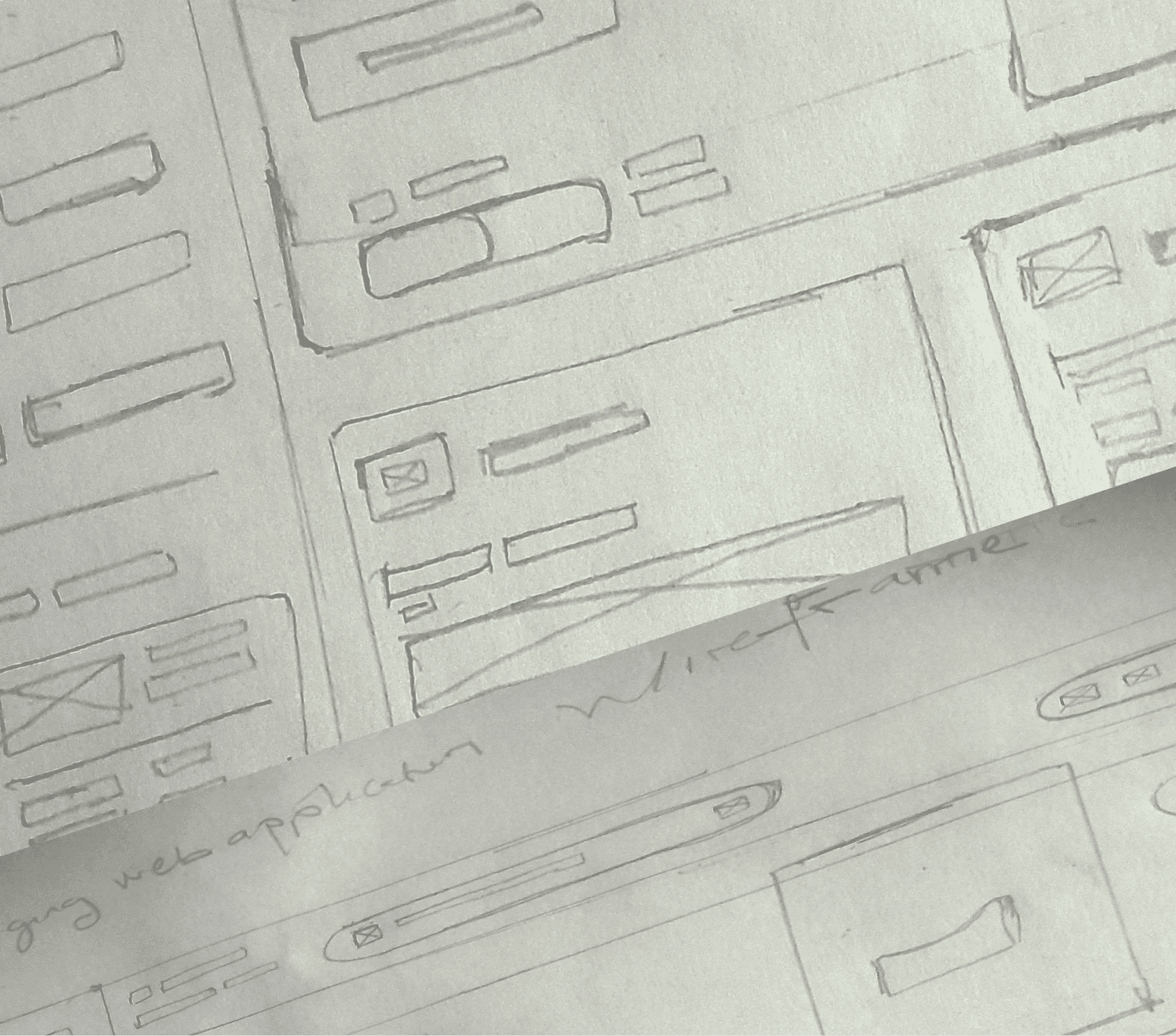
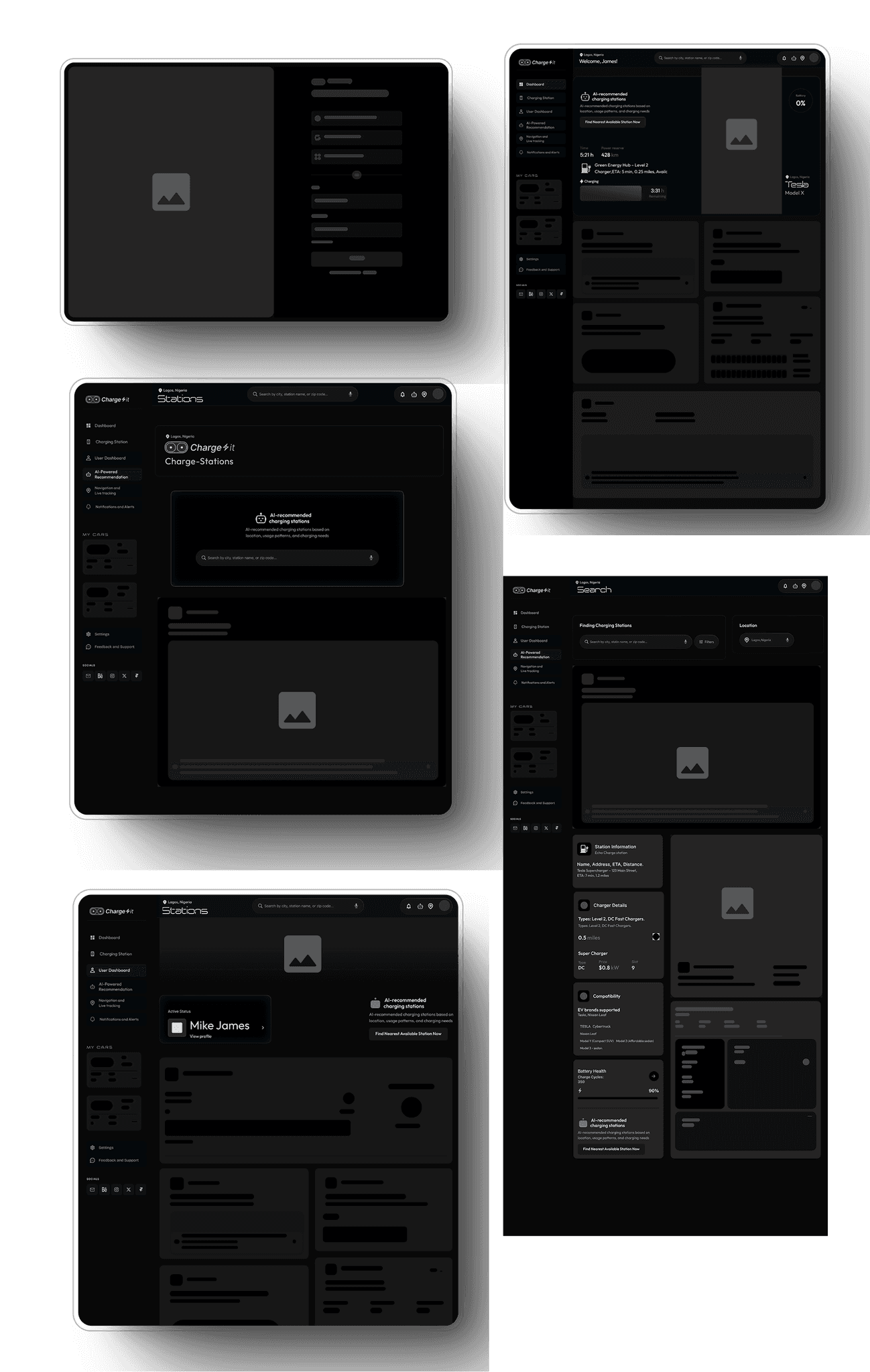
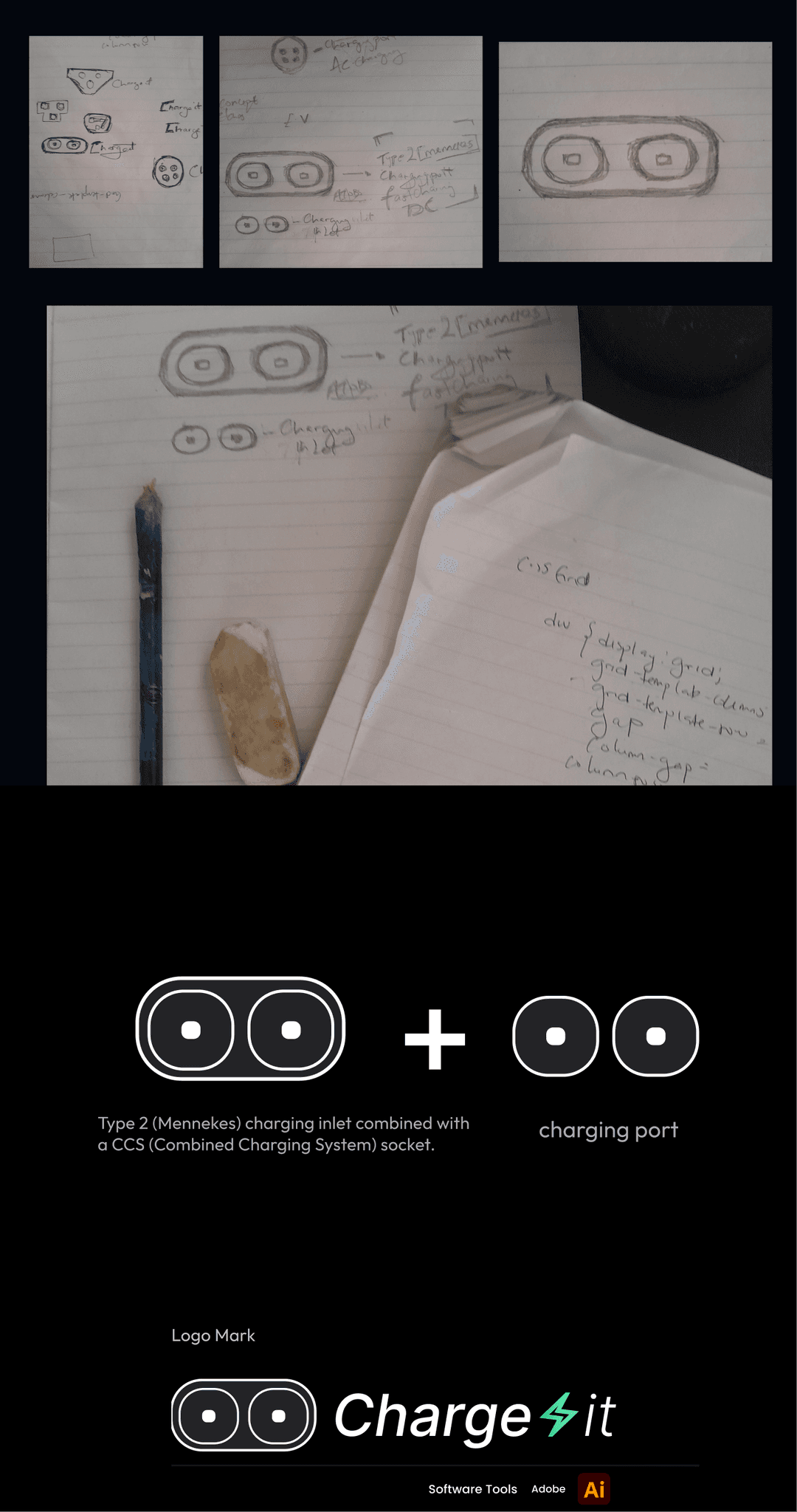
To make the digital wireframes, I started by putting my ideas on paper. Then I began to work on the high-fidelity wireframes in Figma. After several iterations, I came up with these wireframes. I made sure my screen design is based on user research's feedback and findings
Style Guide Wireframes
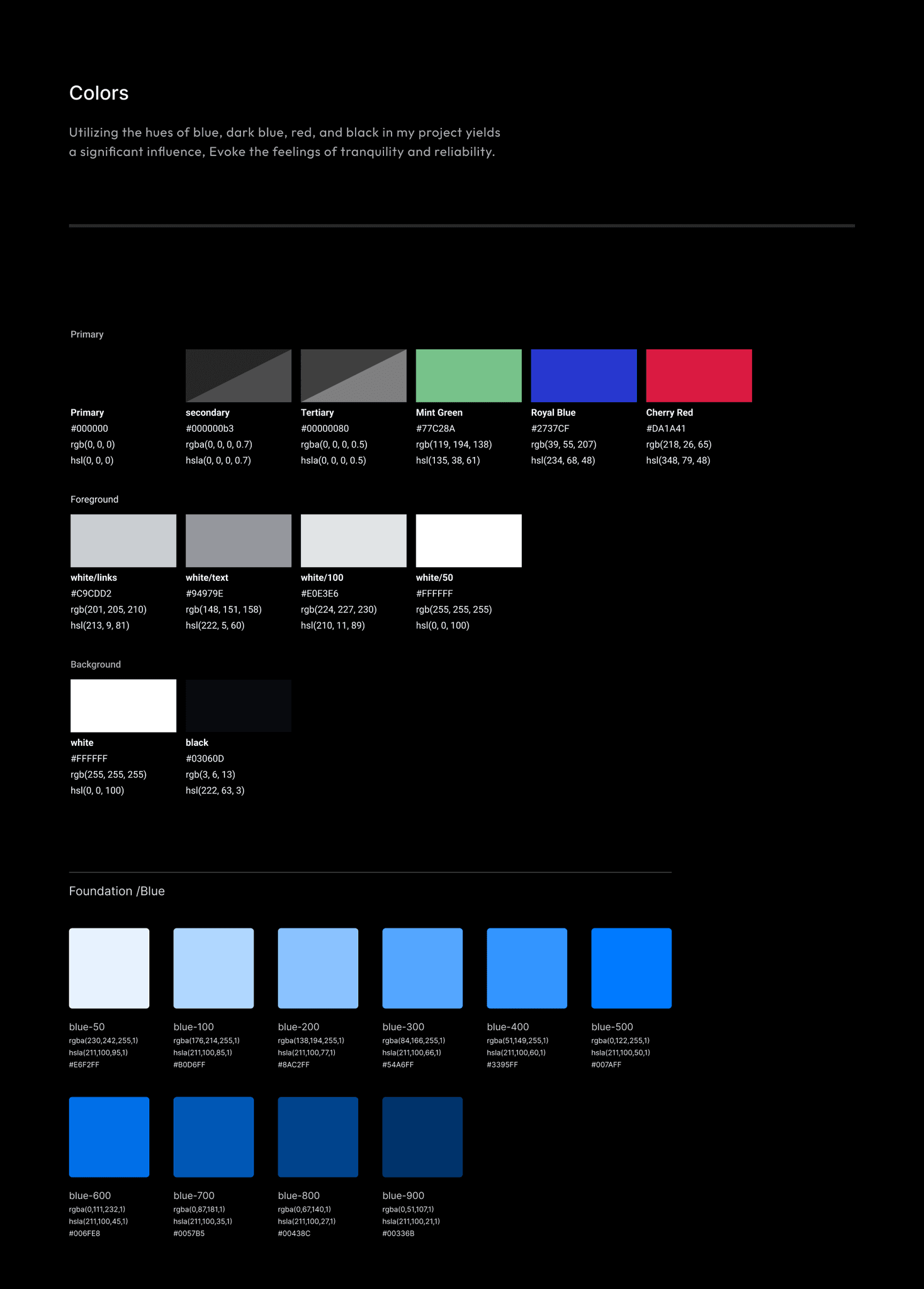
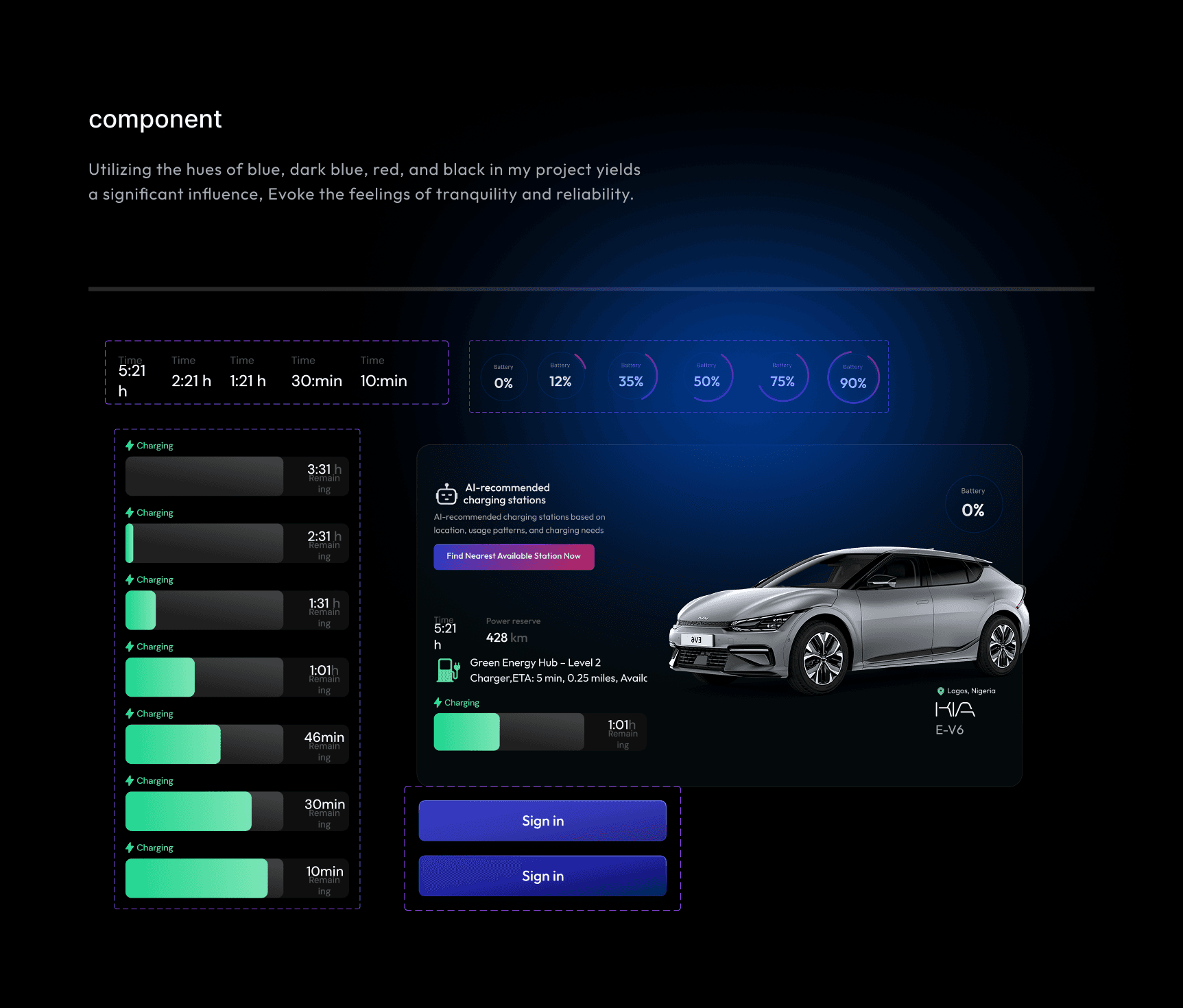
We wanted to choose a bright and eye-pleasing color palette and readable front, as the application will be used on all phone sizes.

High-Fidelity Mockups
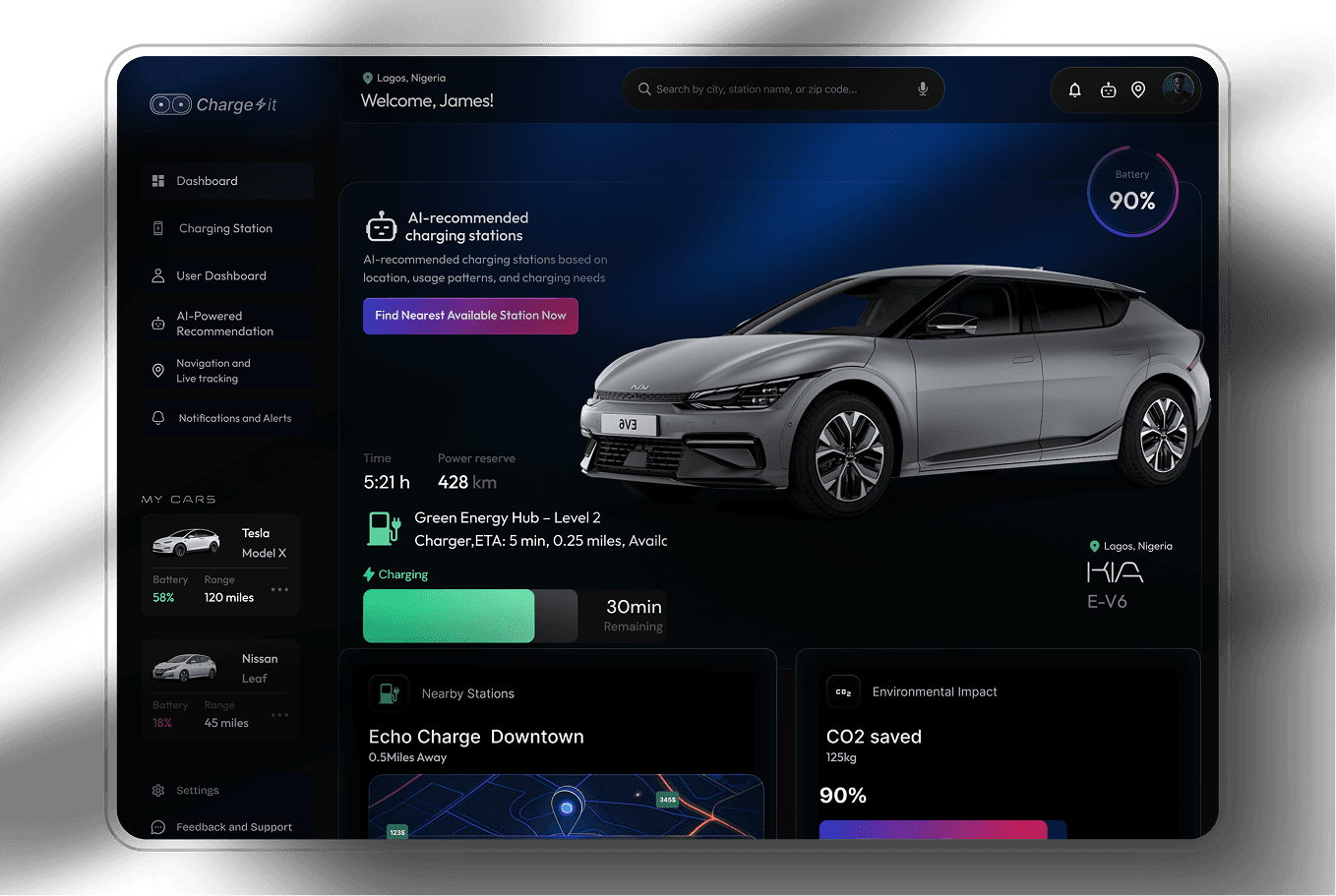
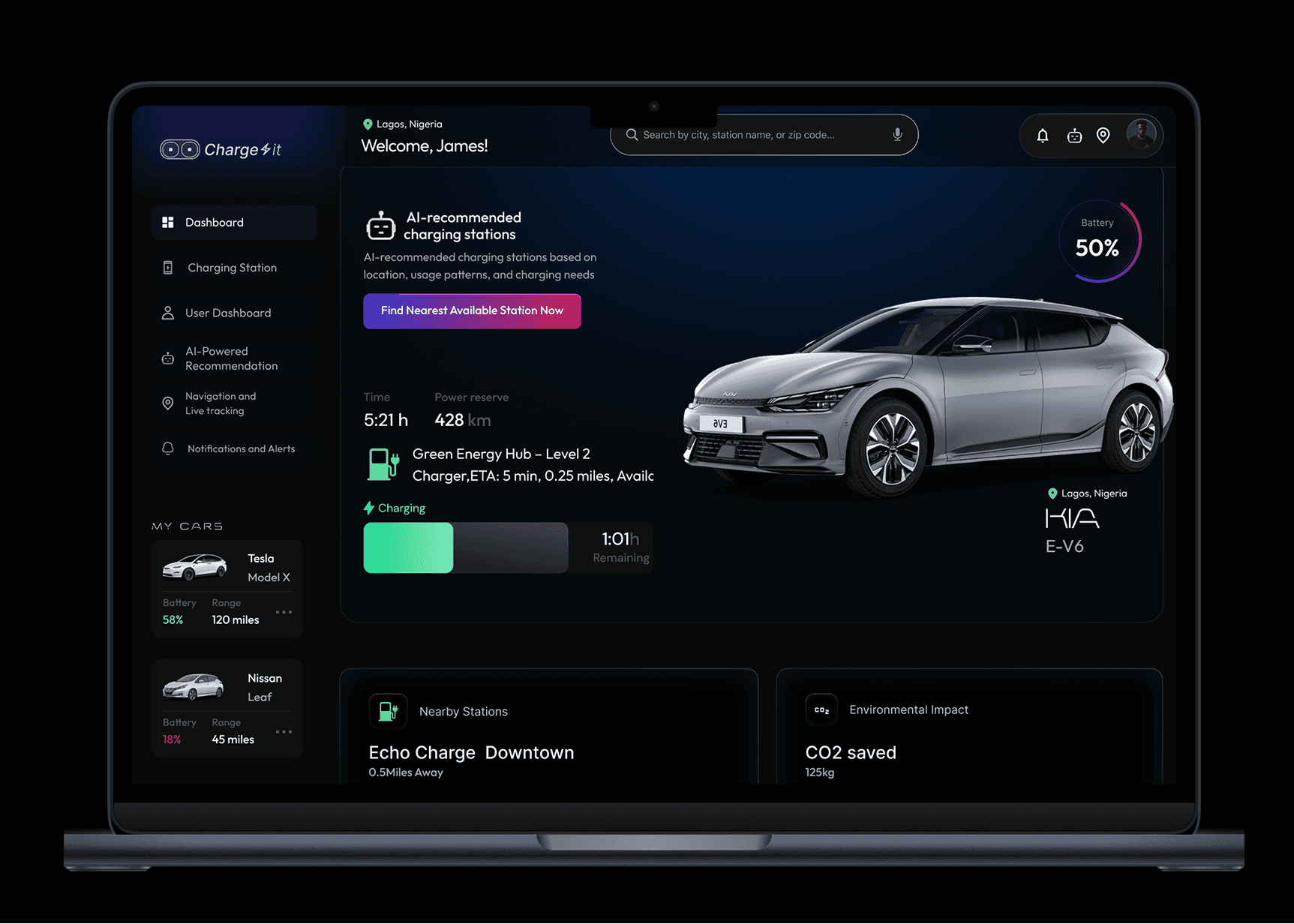
Below we will take a look at the most important application screens separately.

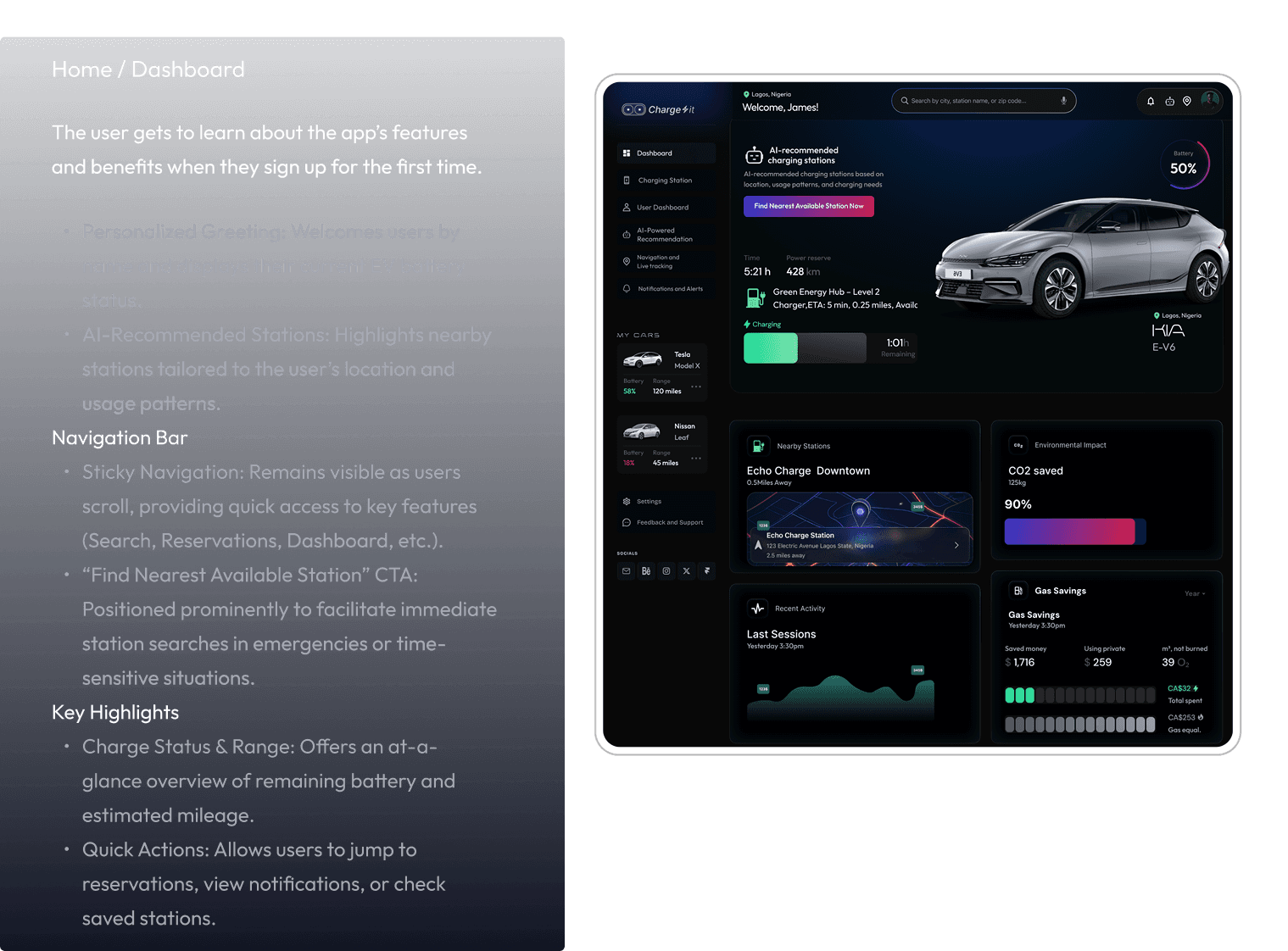
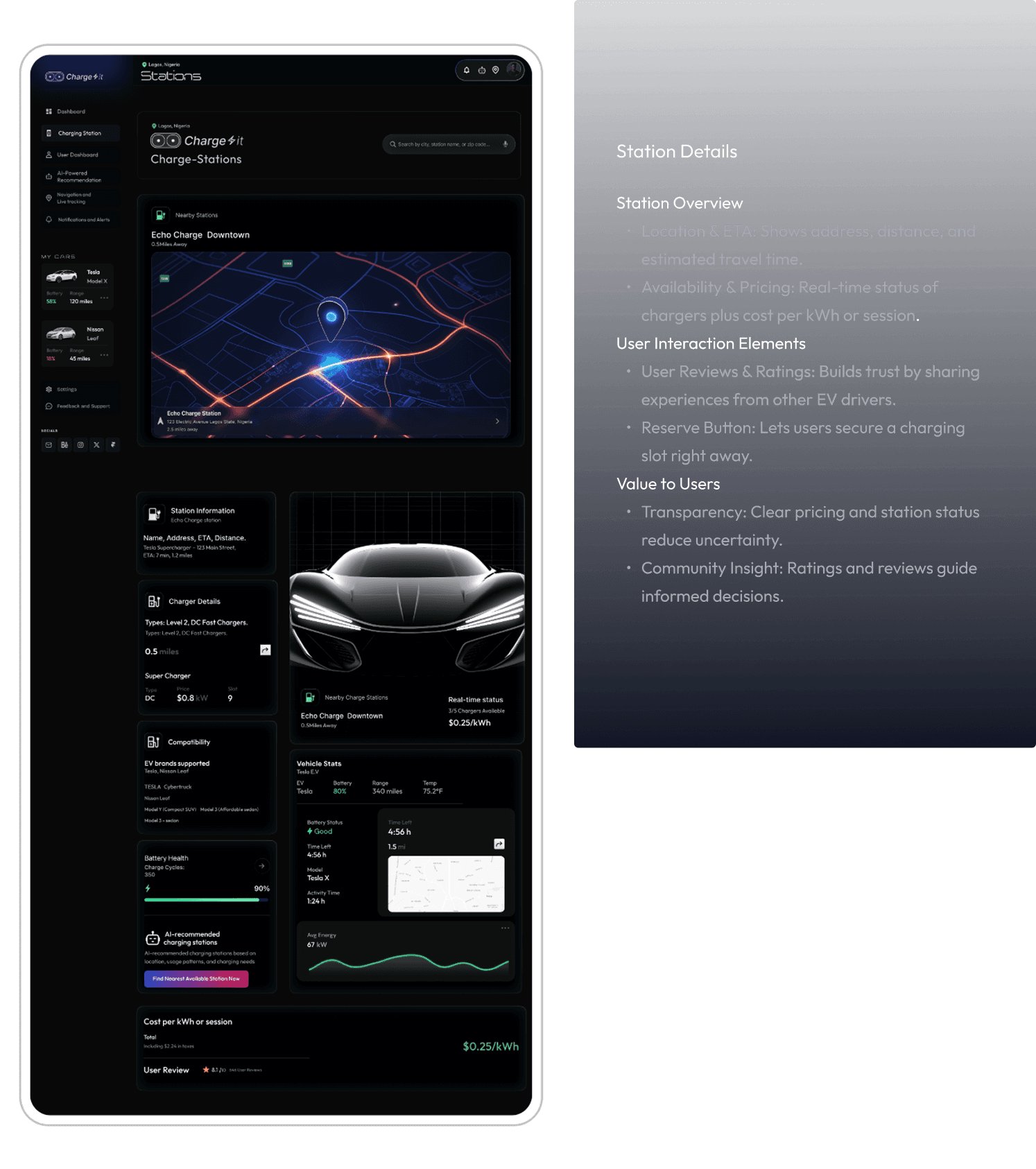
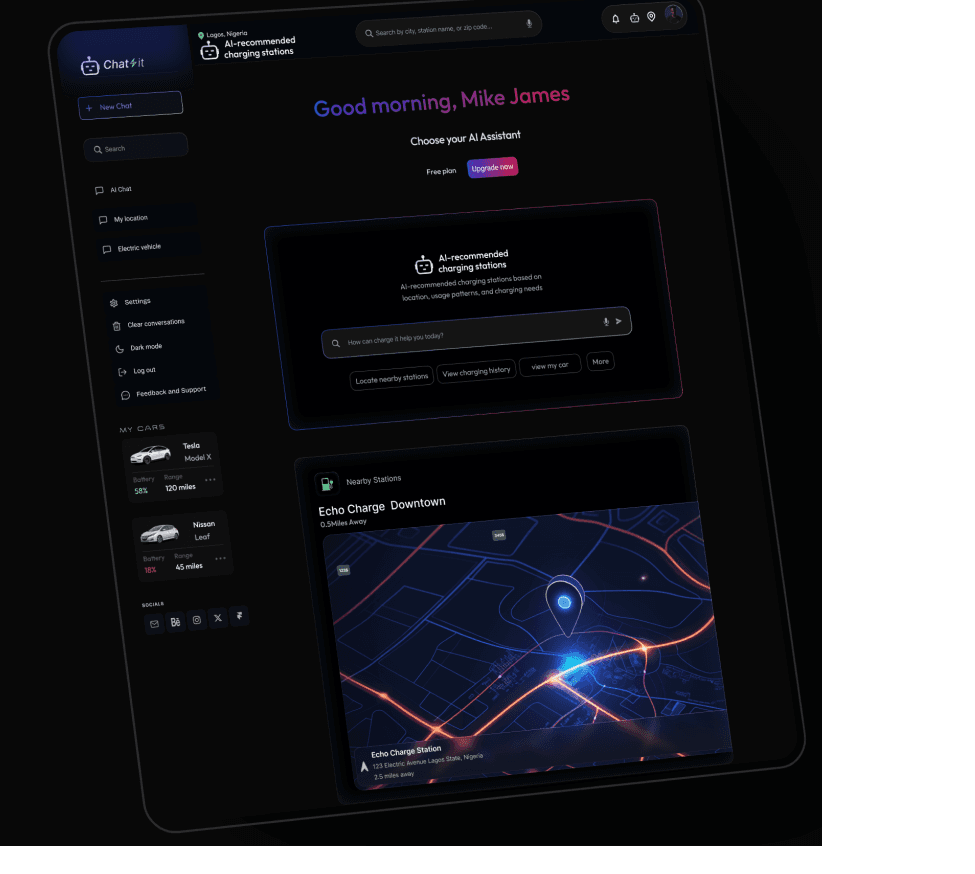
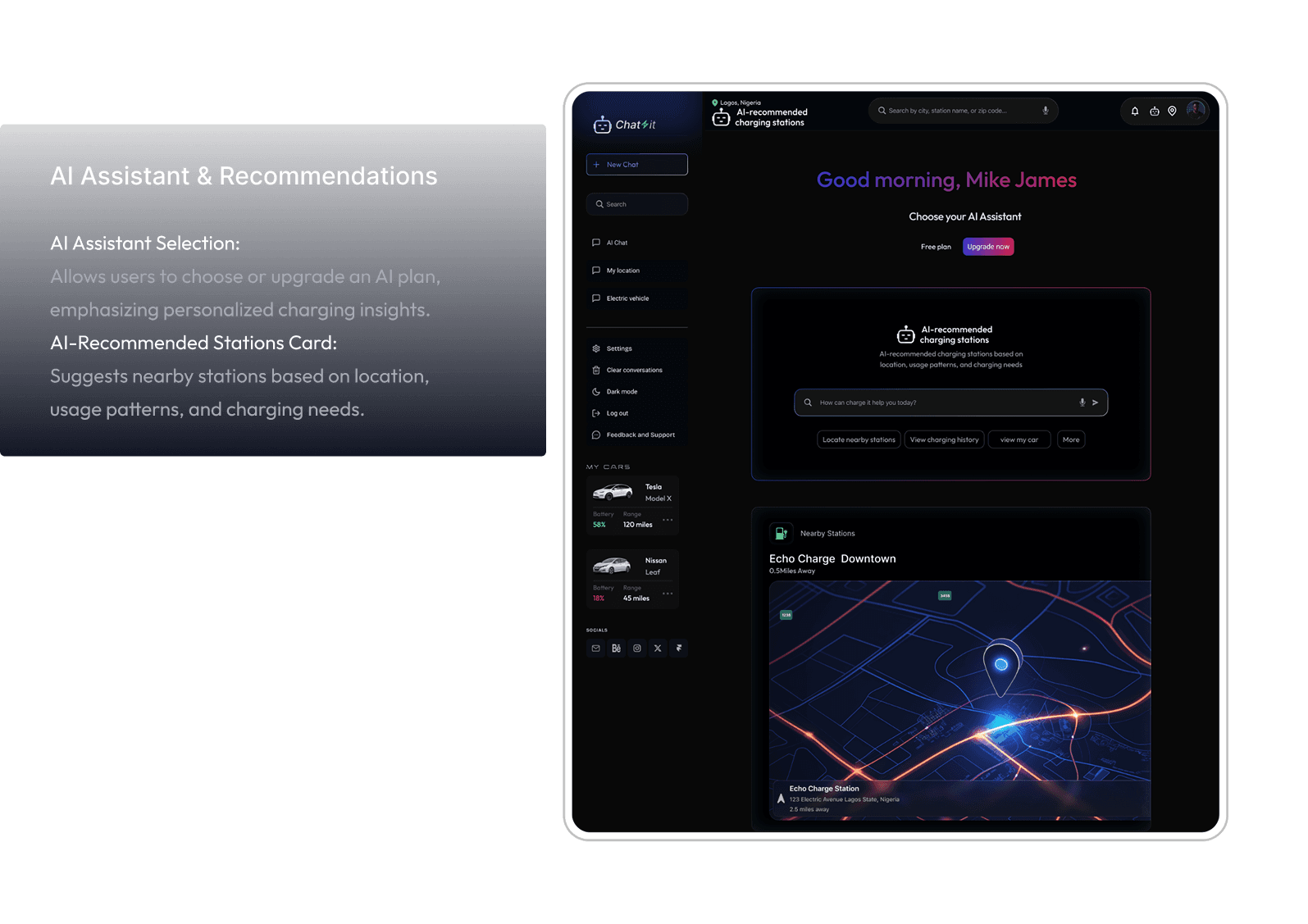
AI Assistant & Recommendations
Personalized station recommendations based on user preferences, usage history, and traffic conditions.
Alerts for discounts or peak-hour rates at preferred stations.
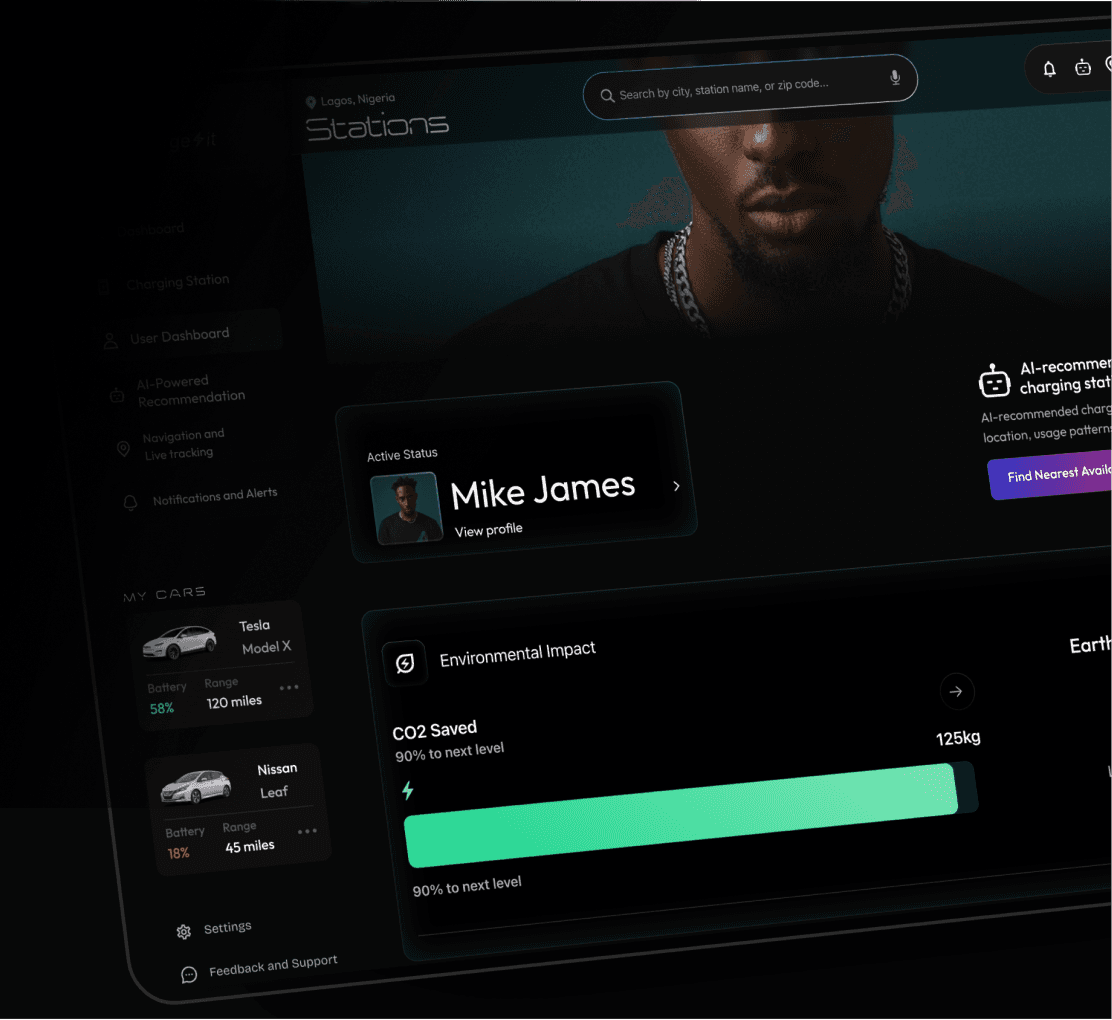
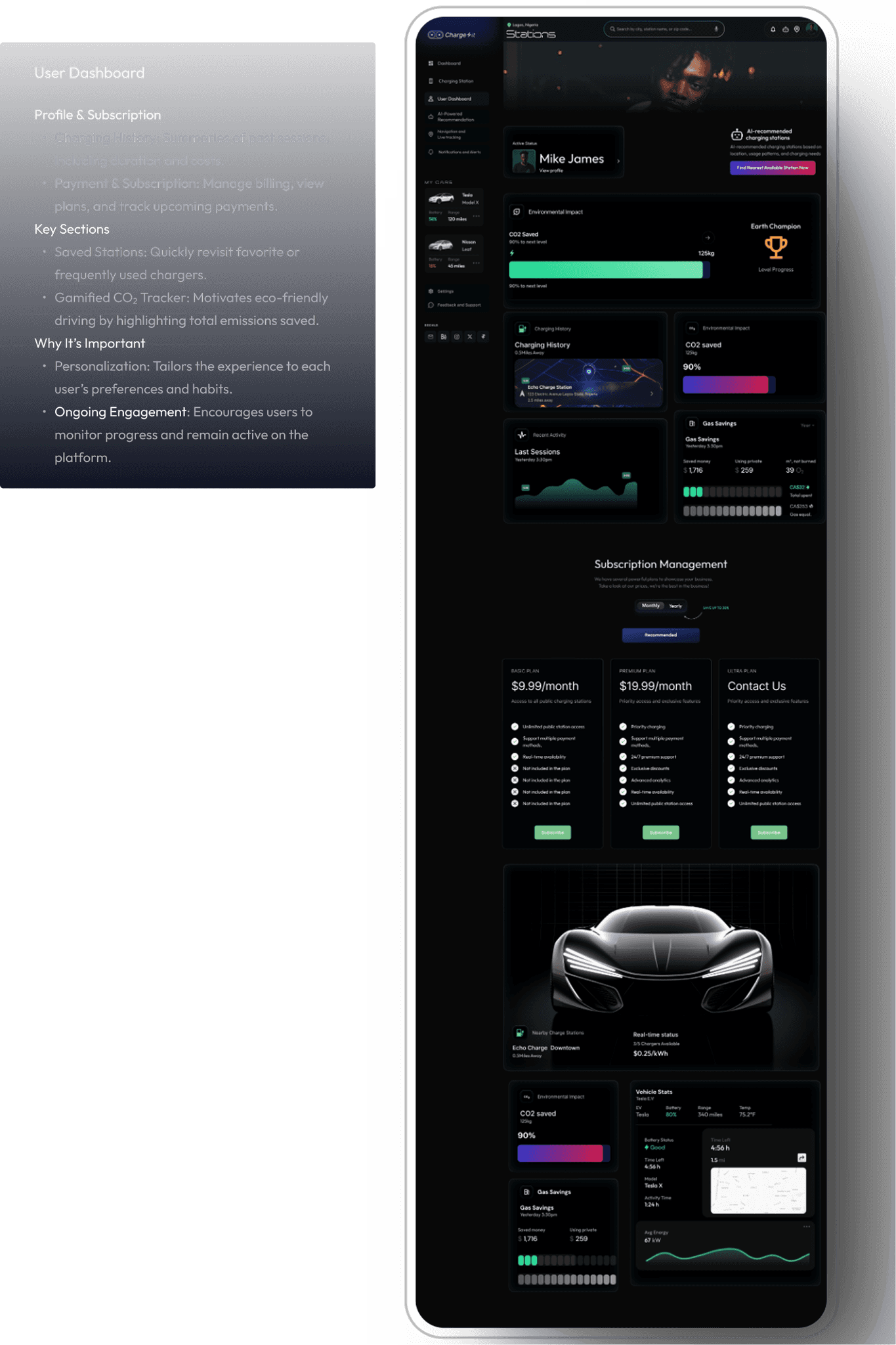
User Dashboard
Charging history, cost breakdown, and saved stations.
Gamified progress bar showcasing environmental impact (e.g., CO2 saved).
Subscription and payment management.
Other Screens
Below we will take a look at the most important application screens separately.
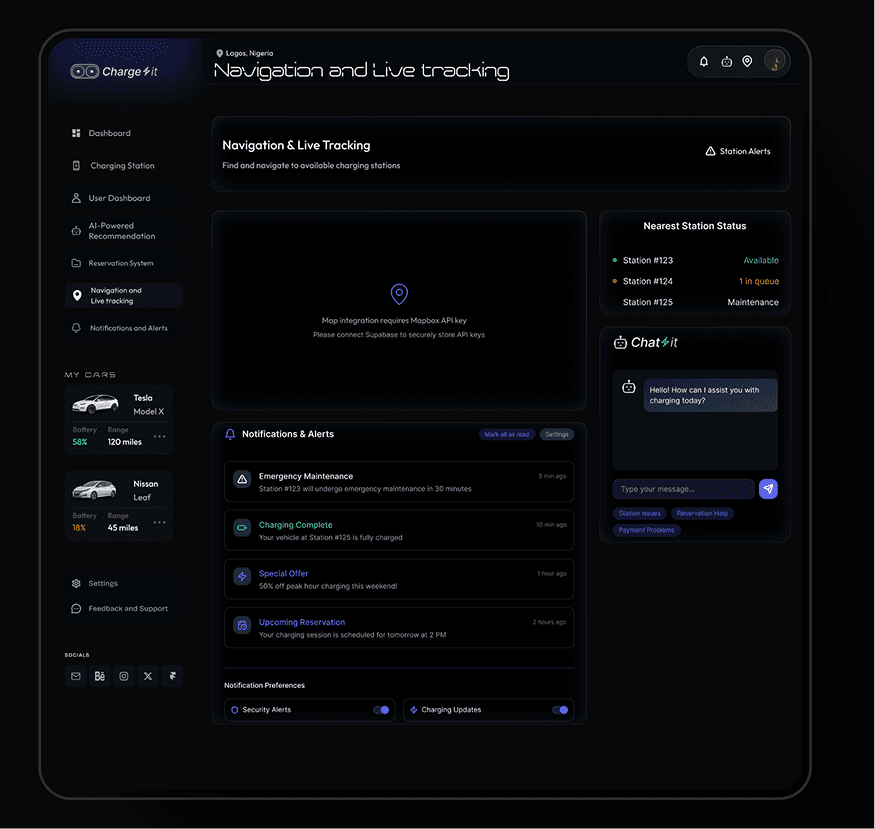

High-fidelity prototype
After finalizing the low-fidelity wireframes, I worked on creating the final designs with the goal of making them simple and intuitive for user to easily find, reserve, and navigate to the nearest and most suitable charging station

PROTOTYPE
Usability Testing Highlights
I carried out a usability study, the study type is unmoderated and a participant of 5 users . In the usability findings users needs assistive technology
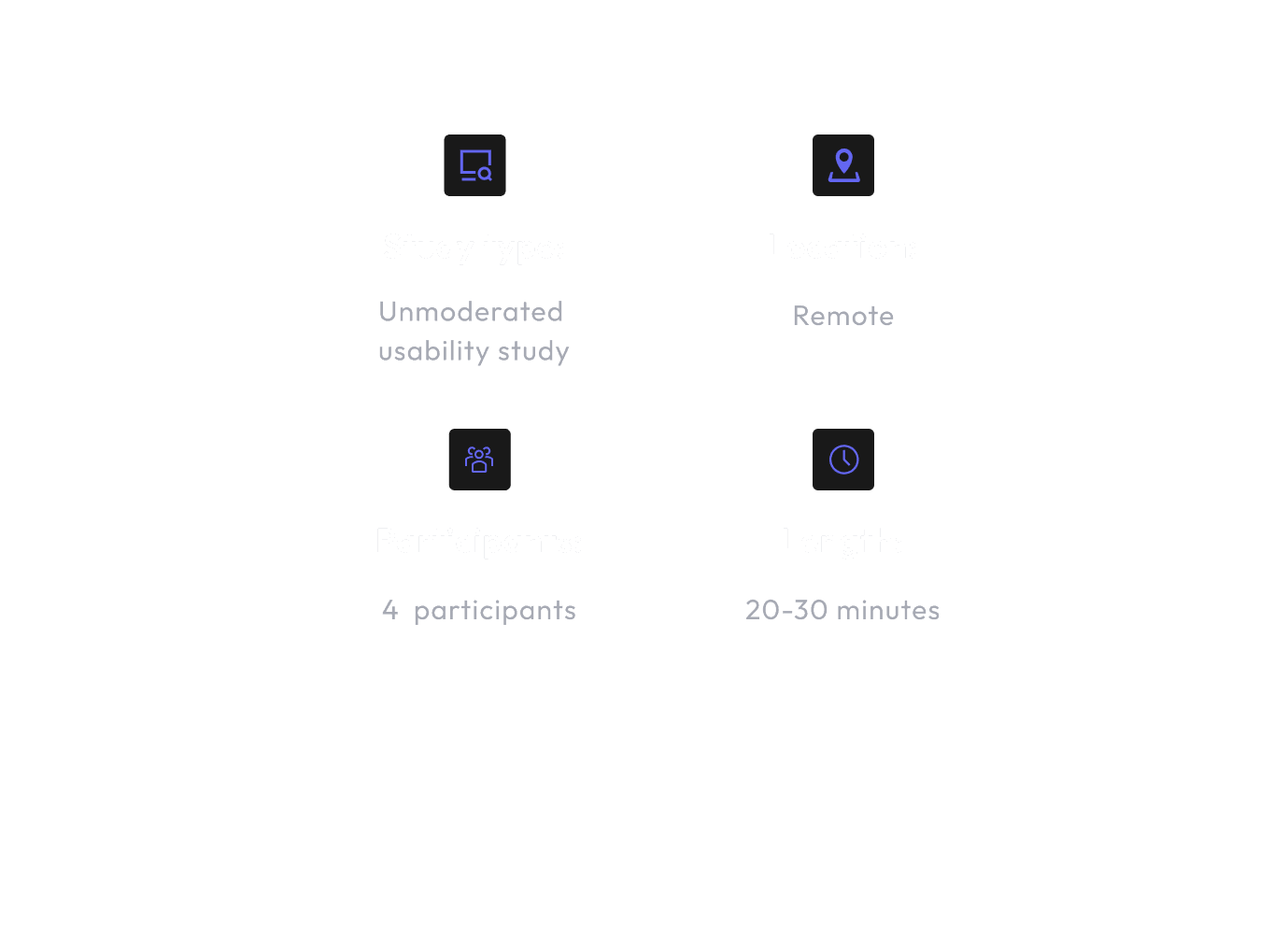
Usability study: findings
Now that I have the key insights from the usability study, In the usability findings users needs assistive technology

Accessibility considerations
Now that I have the key insights from the usability study, In the usability findings users needs assistive technology


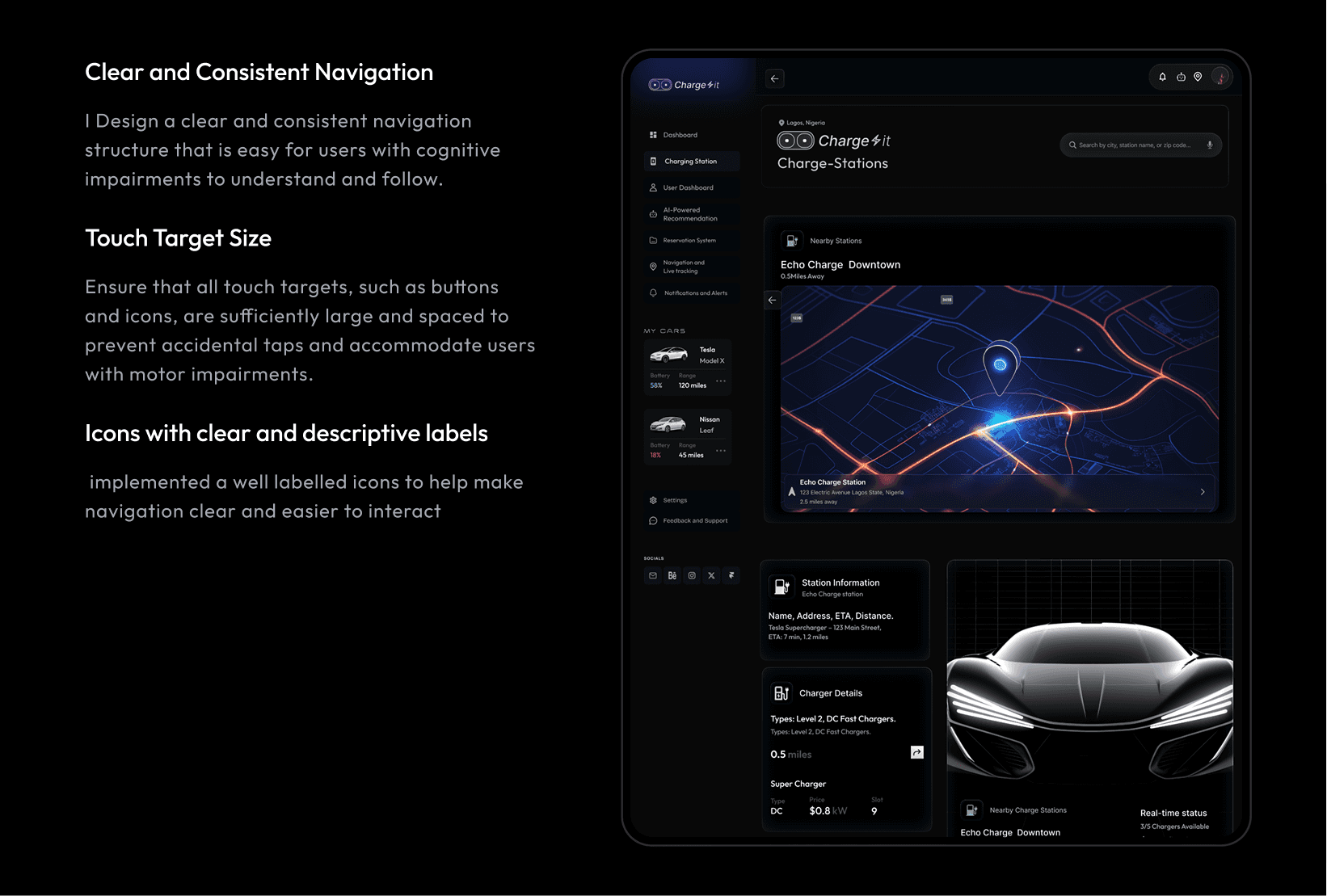
Navigation and Interaction Accessibility
Impact and Success Metrics
The success of Charge It is measured not only by its technical prowess
but by the enhanced user engagement and satisfaction it drives.
Key success metrics include:
User Engagement: Increased session durations and frequent usage driven by intuitive design and gamified elements.
Usability: High scores from initial usability testing underscore the platform’s ease of use.
Accessibility: Positive user feedback highlights the effective integration of inclusive design principles.
Conversion: Streamlined search and reservation processes have reduced bounce rates and improved overall conversion rates
Conclusion
Charge It aims to simplify the EV charging experience by enabling users to find, reserve, and navigate to the nearest and most suitable charging station. With AI-driven recommendations and a clean, intuitive interface, this platform will ensure ease of access, real-time updates, and a seamless user experience.

Key Takeaways
In this study, I aimed to address common issues faced by users
and evaluate the impact of UX design on their mood and decision making process. Through conducting this research and design,
I gained a deeper understanding of how user experience can significantly influence a user’s emotions and choices.
What I Learned
I have gained valuable insights and knowledge through the design process.
Some of the key things I have learned include:
1. Understanding user needs
2. Importance of simplicity
3. Accessibility considerations
4. Understanding and implementing user feedback
5.Manage information to not overwhelm the user
Limitations
One potential limitation could be the reliance on accurate and up-to-date information. Outdated or incomplete data could lead to mismatched recommendations and potential user frustration.
Role
UX & UI
Product Strategy
Branding
Website Development
PROTOTYPE
TEAM

Duration and date
January- February 2025
2 Months
You might also like


About Me
Know more about me